
If you have a dog or a cat, there is a good chance a small box arrives at your door every month without you thinking much about it. You signed up at some point, the payment comes out automatically, and the treatment goes on the back of your pet’s neck or into a chew. Job done.
In August 2026, a committee of the UK’s House of Lords published a report suggesting that a lot of those boxes should never have been sent.
The report has been picked up around the world, usually under a headline along the lines of “should you stop treating your pet for fleas?” That framing is doing nobody any favours, least of all Australian pets. So it is worth going back to what the report and the research behind it actually found, and working out what it means if you live in Cairns, or Coffs Harbour, or Cottesloe.
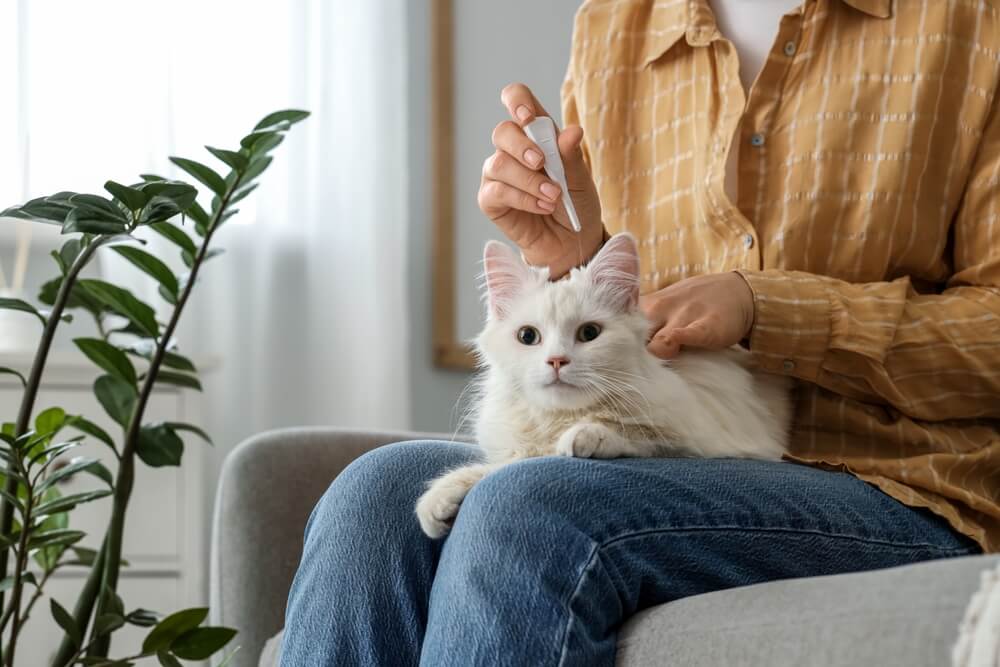
What the report actually said
The report is called Paws for concern: pets, parasites and pollution, and it comes from the House of Lords Environment and Climate Change Committee.
Its central finding is not that flea and tick treatments are dangerous. It is that nobody ever properly checked.
For decades, regulators worked on an assumption: medicines given to pets, as opposed to farm animals, do not end up in the environment in meaningful quantities. Cats and dogs are not livestock. They do not graze paddocks. The chemicals stay on the animal.
That assumption was never seriously tested, and it turns out to be wrong. As Dr Rosemary Perkins of Imperial College London, one of the researchers who gave evidence, put it, these products “have no meaningful environmental risk assessment,” and the discovery “has really opened up a Pandora’s box, because we have dozens of these products that have been approved based on this assumption that we now know is not scientifically valid.”
The committee’s recommendations follow from that gap. It wants environmental risk assessments extended to all pet parasite medicines, sales data published, and access moved to a risk-based system where a professional assesses the individual animal rather than a product simply being sold off a shelf.
And then there is the line that has caused the most discomfort in the industry:
“The benefits of routine, and certainly monthly, pet parasite medicine usage are not supported by scientific evidence.”
The committee singled out manufacturers promoting the idea that routine treatment is always required, and encouraging owners onto monthly subscriptions. Its chair, Baroness Sheehan, described the over-use of these products on household pets as “the equivalent of using a sledgehammer to crack a nut.”
Where the chemicals go
The research underpinning all this is worth understanding, because it is genuinely surprising.
Two chemicals dominate the findings. Fipronil is a broad-spectrum insecticide, familiar as the active ingredient in older spot-on products. Imidacloprid is a neonicotinoid. Both were banned for agricultural use in the UK in 2018 because of the risk to bees and other insects. Both kept turning up in rivers anyway.
A 2021 study tested English waterways and found fipronil in 98 per cent of samples and imidacloprid in 66 per cent, frequently at concentrations high enough to harm the aquatic insects that fish and birds feed on. Once agricultural use was ruled out, attention turned to the 22 million cats and dogs in British homes.
The follow-up work traced the pathways, and the results were not what anyone expected.
Researchers studied 98 dogs treated with spot-on products and tested three routes into the wastewater system: bathing the dog, washing its bedding, and owners washing their hands. Handwashing was the largest single pathway. Residue was still detectable on owners’ hands at least 28 days after the treatment was applied. As Perkins described it, the team found pesticide in the wash-off “even before we asked people to stroke their pets, so they’re just constantly on the hands of pet owners.”
A separate study published in the Veterinary Record put 49 treated dogs into water to simulate a swim. Five days after application, an average of 10.1 per cent of the imidacloprid dose washed off in a single five-minute swim. Even at day 28, the concentrations still exceeded the safe threshold for freshwater life.
This is the detail that matters most for ordinary pet owners: none of these dogs were being treated incorrectly. Their owners followed the instructions. The report’s conclusion is that following the label as written still produces substantial emissions into waterways, which is precisely why the committee has recommended extending the “do not bathe” window on packaging from four days to 28.
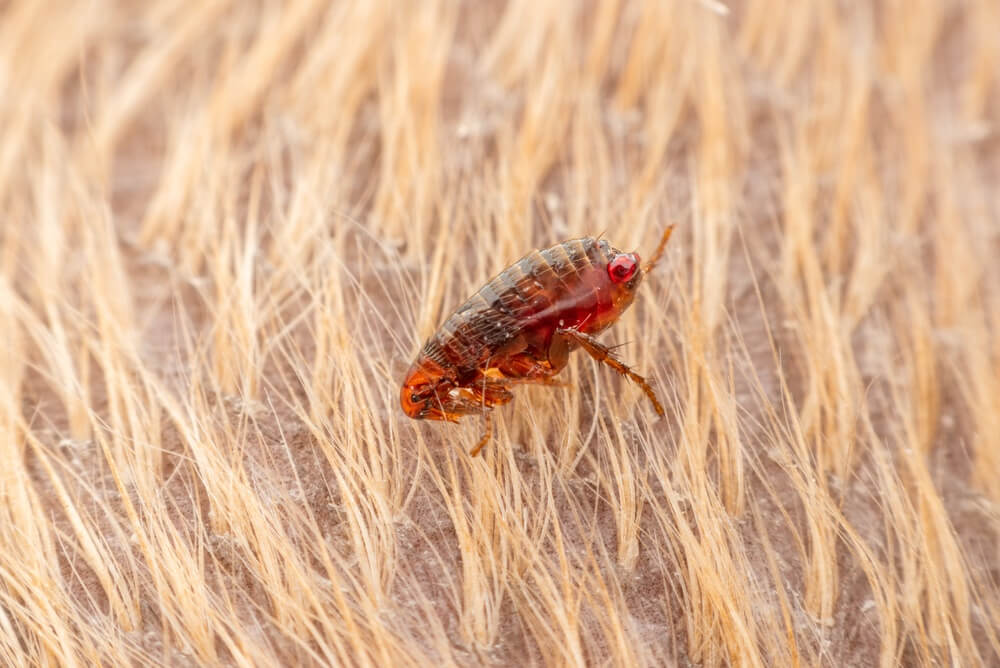
Why this does not mean stopping treatment in Australia
Here is where the international headlines become actively dangerous if you read them literally.
Australia has the paralysis tick, Ixodes holocyclus. It is found along the eastern seaboard, roughly from north Queensland down through New South Wales into eastern Victoria, generally within a coastal band. It is not a nuisance parasite. It injects a neurotoxin that causes progressive paralysis, and untreated cases are frequently fatal. Every spring and summer, emergency clinics along that coastline fill with dogs and cats on ventilators.
If you live in that zone, tick prevention is not a lifestyle choice, and no responsible vet is going to tell you to drop it because of river data collected in England.
Heartworm is a similar story in a different register. It is spread by mosquitoes, it is present across much of the country, and prevention is genuinely preventive – the alternative is treating an established infection, which is expensive, risky and hard on the animal.
Then there are fleas, which cause flea allergy dermatitis and misery in equal measure, and intestinal worms, some of which are transmissible to people.
There are also two honest limits on the evidence that deserve stating plainly:
- All of the river monitoring is British. Australia has no published equivalent. That is not a reason to dismiss the findings, since the same products are sold here under the same assumptions, but nobody should claim Australian waterways have been tested when they have not.
- The newer chewable products are not a clean substitute. Isoxazolines, the class behind most of the popular monthly and three-monthly chews sold in Australia now, have less environmental data than the old spot-ons, not more. They bind to soils and sewage sludge, and they leave the animal through urine and faeces. The report is explicit that very little work has been done here. Switching to a chew is not an environmental solution, and anyone selling it as one is ahead of the evidence.
What “risk-based” actually means
The position the report lands on, and the one the British veterinary bodies have been building towards for several years, is not less treatment. It is targeted treatment.
The practical version is simple. Instead of every animal receiving the same broad-spectrum product every month forever, the vet assesses the individual animal and prescribes accordingly. That assessment weighs things like:
- Where you live. A dog in Byron Bay and a dog in Fremantle face completely different tick risks. Western Australia does not have the paralysis tick. Coastal New South Wales very much does.
- Season. Risk is not flat across the year in most of the country.
- Lifestyle. An indoor-only cat, a farm dog, a dog that swims daily, a dog that boards regularly and a dog that never leaves a suburban yard are not the same patient.
- Who else is in the house. Small children, immunocompromised adults, other animals.
- What the actual local parasite picture looks like rather than a national average.
The output might still be year-round broad-spectrum cover. For a lot of dogs on the east coast, it will be. But it will be a decision rather than a default, and it will be revisited.
The part that is really about business models
The report reserves its sharpest language not for the chemicals but for how they are sold. Dr Andrew Prentis, giving evidence, compared unnecessary subscription treatment to “signing up to health insurance and then being supplied with year-round antibiotics just in case you get ill.”
That comparison is worth sitting with, because a subscription is structurally the opposite of a risk assessment. A risk assessment produces a different answer for different animals and changes over time. A subscription produces the same answer every month, and it was locked in on the day you signed up, often before anyone had examined your pet properly.
This is where the ownership model of your clinic quietly matters.
When a practice is run by the people who work in it, the parasite conversation can go wherever the animal’s circumstances take it. There is no group-level product target, no head-office plan structure that a nurse has to fit your pet into, and nobody upstairs measuring the clinic on subscription sign-ups. If the honest answer for your indoor cat is “less than you are currently buying,” an independent vet can simply say so.
That is not a claim that every corporate clinic prescribes badly or that every independent prescribes perfectly. It is a point about incentives. When the recommendation and the revenue are tied together by someone who has never met your pet, the recommendation gets harder to trust. When your vet knows your dog, your suburb and your habits, and answers only to their own professional judgement, it gets easier.
Five questions worth asking at your next visit
You do not need to change anything on your own. You need a better conversation. Try these:
- What exactly am I protecting against, and which of those risks apply where we live?
- Does my pet need year-round cover, or is there a genuine off-season here?
- Am I on a broad-spectrum product when something narrower would do the job?
- Could we test rather than treat for any of this? Faecal testing and heartworm antigen testing are real options in lower-risk cases.
- If I am on a monthly plan, when was this last reviewed against my pet’s actual circumstances?
And if you have just applied a spot-on
Whatever you and your vet decide, the research gives a few practical steps that reduce environmental impact without reducing protection at all:
- Keep your dog out of rivers, lakes, dams and the ocean for as long as you reasonably can after application. The committee has recommended 28 days, well beyond the four days most packaging currently states.
- Wash your hands after applying, and be aware that residue lingers on your hands and on your pet’s coat for weeks afterwards. Wash after handling, particularly before preparing food and around small children.
- Wash pet bedding less often in the weeks following treatment where practical.
- Dispose of unused product and packaging properly rather than down a drain or in general waste.
- Do not put shed fur out for nesting birds. Contaminated fur has been found in bird nests, and it is a small thing that is easy to avoid.
The bottom line
The research does not say your pet’s parasite prevention is harming them. It says the environmental cost was never measured, the monthly default was never evidence-based, and the products should be prescribed to individual animals rather than sold on autopilot.
In a country with paralysis ticks and heartworm, the answer is not to stop. It is to have a proper conversation with a vet who knows your area, examines your animal, and has no reason to give you any answer other than the right one.
If you would like that conversation with an independently owned clinic near you, search the Independent Vet directory to find one in your area.
Sources
- Paws for concern: pets, parasites and pollution, House of Lords Environment and Climate Change Committee, August 2026
- Perkins et al., Potential role of veterinary flea products in widespread pesticide contamination of English rivers, Science of the Total Environment, 2021
- Perkins, Glauser and Goulson, Swimming emissions from dogs treated with spot-on fipronil or imidacloprid, Veterinary Record, 2025
- Imperial College London, Handwashing a major source of pet pesticide pollution in UK rivers
- Science Media Centre, expert reaction to the House of Lords report
- Vet Sustain, The 4Rs of Responsible Prescribing of Pet Parasiticides
Search Independent Vets

About the Author: Patrick Africano
Dr Patrick is the founder and lead veterinarian at Ark Angel Vet, providing in-home veterinary care with a focus on peaceful and compassionate end-of-life support. With extensive experience in small-animal medicine, Dr Patrick brings warmth, empathy, and professionalism to every visit. Dedicated to animal welfare and client comfort, Dr Patrick has earned deep trust across Perth for his gentle, respectful manner and genuine care for every patient.
Why Choose an Independent Vet?
Personalised Care
Don't just search for a vet near me, find an independent vet near you. Independent clinics love building relationships with you and your pet – you’re not just another appointment in the system.
Community Focused
Local vets are part of your community. They support neighbourhood initiatives, get to know families, and often treat multiple generations of pets.
No Corporate Pressure
Large corporate-owned clinics often face business targets and upselling pressures. Independent vets have more flexibility to recommend the best option for your pet.